Thanksgiving Pie Orders 2026: Pricing, Cutoffs and Cottage Food Rules
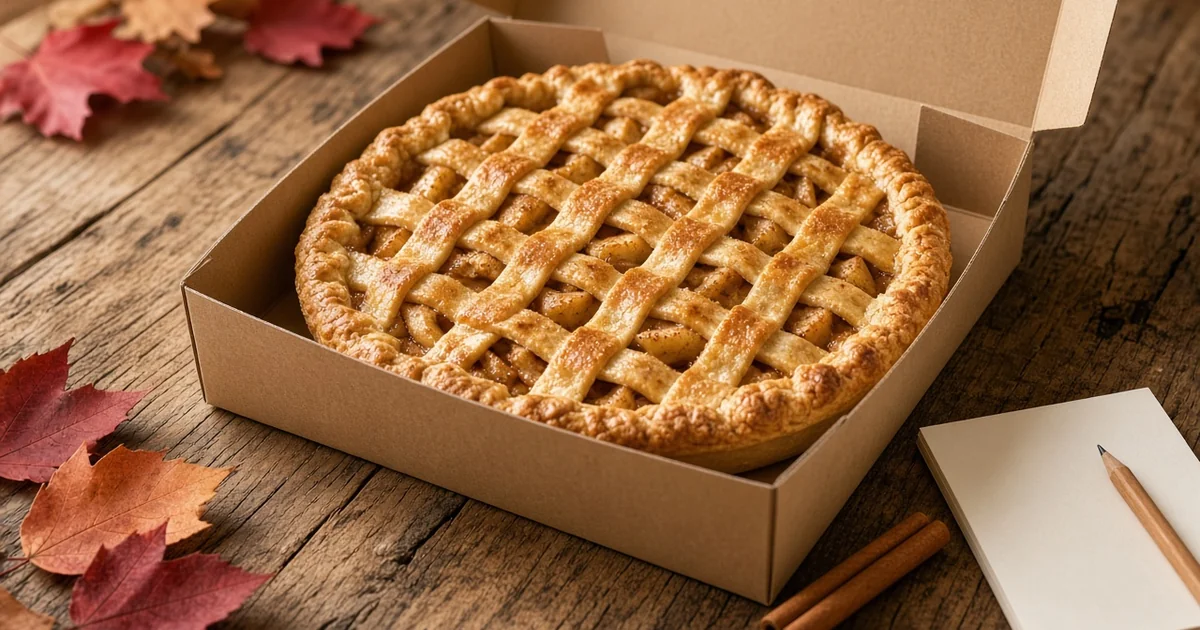
Thanksgiving 2026 falls on Thursday, November 26 (timeanddate.com). That gives home bakers about ten days to take pie orders, buy ingredients, bake, and hand off every box before the turkey hits the table.
If you run a home bakery, a cottage food business, or a small catering kitchen, this is the week your DMs fill up with "Are you still taking pie orders?" Saying yes to everyone feels great on Monday and terrible on Wednesday at 2 a.m.
This guide walks you through the three decisions that make or break a Thanksgiving pie rush: which pies you can legally sell, what to charge, and when to stop taking orders.
Quick Summary for Food Entrepreneurs (TL;DR)
- Check your state's cottage food list first. Several states allow baked fruit pies but list pumpkin, pecan, custard, and meringue pies as not allowed because they need refrigeration.
- Price from your real cost: ingredients, packaging, your time, overhead, and card fees. In our example, a 9-inch apple pie should sell for about $33, not $20.
- Set an order cutoff based on oven capacity, not hope. Our example kitchen caps orders at 43 pies.
- Take a deposit that covers at least your ingredients and packaging, and confirm every order in writing.
Can I sell pumpkin pie under my state's cottage food law?
Maybe not, and this is the question to answer before you post your menu. Cottage food laws generally cover foods that are safe at room temperature, and the rules vary by state and sometimes by county.
- Michigan allows cooked fruit pies and shelf-stable pies, but does not allow pies that need refrigeration, such as pumpkin, banana cream, lemon meringue, or custard (Michigan Department of Agriculture and Rural Development).
- Maryland says pumpkin, meringue, and pecan pies are considered potentially hazardous and are not allowed as cottage foods, citing USDA guidance that egg-rich pies must be refrigerated after cooling (Maryland Department of Health).
- Springfield-Greene County, Missouri lists fruit pies (apple, cherry, berry) as allowed and pumpkin and meringue pies as not allowed (City of Springfield).
Some health departments look at the specific recipe instead of a blanket list, so the safest move is simple: read your own state's list and ask your local health department if a pie is borderline. If pumpkin is off the table, build your Thanksgiving menu around apple, cherry, and mixed-berry pies, or bake custard pies in a licensed commercial kitchen.
How much should I charge for a homemade pie?
Start from what the pie actually costs you, then add profit. A price that only covers ingredients means you are working for free during the busiest week of the year.
Worked example: a 9-inch apple pie
These are example numbers. Plug in your own.
- Ingredients (crust and filling): $8.40
- Packaging (box, liner, label): $1.60
- Your time: 40 minutes hands-on at $20/hour = $13.33
- Overhead share (power, gas, supplies): $1.50
- Total cost: $24.83
Now say you want a 20% profit and your card processor charges about 3% (check your real rate). Divide the cost by what is left after both: $24.83 ÷ (1 − 0.20 − 0.03) = $32.25. Round up to $33. At that price you pay yourself $20/hour and keep about $7.18 of profit per pie after the card fee.
Compare that with charging $20 because it "feels right." After the fee, ingredients, packaging, and overhead, about $7.90 is left for 40 minutes of work. That is roughly $11.85 an hour, with zero profit for the business.
When should I stop taking Thanksgiving pie orders?
Your cutoff date should come from your oven, not your inbox. Count it like this:
- Pies per bake: how many fit in your oven at once.
- Bakes per day: include loading, baking, and cooling time.
- Bake days: the days you can realistically bake before pickup.
- Buffer: leave about 10% for a burned crust, a late delivery of apples, or one more order from your neighbor.
Example: one home oven, two bake days
Your oven fits 4 pies, and one bake takes about 75 minutes from loading to unloading. In an 8-hour bake day, that is 6 bakes, or 24 pies. Baking Monday and Tuesday (November 23 and 24) for Wednesday pickup gives you 48 pies. Keep a 10% buffer and your real cap is 43 pies.
Post that number. "Only 43 pies available, orders close Saturday, November 21" protects your schedule and creates honest urgency. When you hit the cap, start a waitlist.
Deposits and written confirmations
For large orders, ask for a deposit that at least covers ingredients and packaging. In our example that is $10 of a $33 pie, so a 50% deposit covers materials with room to spare. Confirm every order in writing: pies, quantity, total, deposit, balance, and pickup date and time.
How PocketChef keeps your Thanksgiving pie orders under control
PocketChef is a management app built for home bakers and small food businesses. During the Thanksgiving rush you can:
- see the real cost and suggested price of every pie, including variable selling expenses such as card fees;
- save your pie crust as a base recipe, so when butter goes up, every pie that uses it updates at once;
- log each order in Order Management with pickup date and time, deposit paid, and balance due, and get a reminder before it is due;
- send a PDF quote for office or family orders straight through WhatsApp;
- pick the pies and quantities for the week and get a shopping list in PDF, so you buy exactly what you need;
- share your holiday menu with the Digital Menu and receive orders already organized;
- track deposits and payments in Cash Flow, and test sales goals in the Sales Simulator.
Frequently Asked Questions about Thanksgiving Pie Orders (FAQ)
1. Can I sell pumpkin pie from my home kitchen?
It depends on your state. Michigan, Maryland, and Springfield-Greene County, Missouri, list pumpkin pie as not allowed under cottage food rules because it needs refrigeration. Check your state's list and your local health department before you sell it.
2. How do I price a homemade pie?
Add up ingredients, packaging, your time, and overhead, then divide by what is left after your profit margin and card fee. In our example, a 9-inch apple pie that costs $24.83 should sell for about $33.
3. When should I close Thanksgiving pie orders?
When orders reach your real oven capacity minus a buffer of about 10%. With Thanksgiving on Thursday, November 26, a cutoff on the weekend of November 21–22 leaves time to shop and bake early in the week.
4. Should I take deposits for pie orders?
Yes, especially for large orders. A deposit that covers at least ingredients and packaging protects you from no-shows during the busiest week of the year.
Bake more profit into this Thanksgiving
A great Thanksgiving rush is not about saying yes to every order. It is about legal pies, honest prices, and a cutoff your oven can keep. Do the math once and use it every holiday.
Add your pies, see the real cost of each one, and send your first PDF quote in minutes. Try PocketChef for free.